

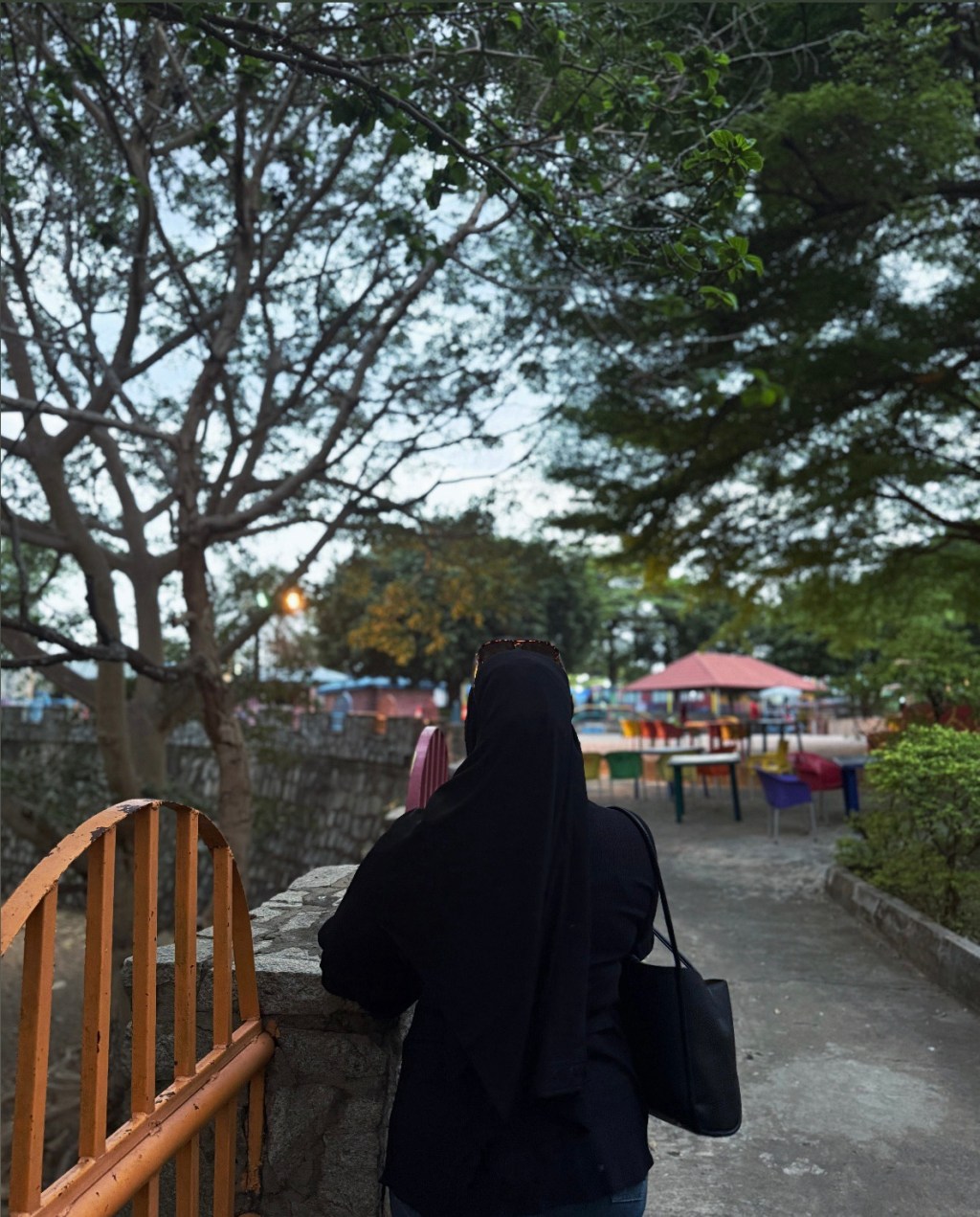
“When is the next baby coming?”
“Your daughter needs a sibling to play with”
“You’ve added weight, you look so big”
“Why are you always breaking out, do you need skincare products recommendations?”
These are a few of the thousand questions and comments that I get at least once a day. Most of the time, people say these things even before we exchange pleasantries, and honestly, these questions and comments keep rankling in my mind for longer than I would have imagined.
I get that some of these questions and concerns can be genuine, but they can also be hard to take. Really hard.
My mind is a web of emotions as I write this. I can’t decide which of the dread that comes with PCOS I should talk about first, especially because I’m willing to make this piece as raw as possible.
I have met a lot of people who view PCOS as a mere ruse, something women dramatize for attention. And yes, even some women who are fortunate enough to be free of this syndrome think this way too. And it’s just so sad.
So, so sad.
On one hand, there’s a lack of adequate research and treatment on PCOS within the medical field. On the other hand, there are people who think everything is just drama. And in the middle of it all are those of us living with the syndrome, trying to navigate it while slowly losing our minds to it.
There are a lot of misconceptions surrounding PCOS, and one of the most common is that having PCOS is synonymous with being barren.
Wrong!
Having PCOS does not mean that you cannot conceive, but it can make the process challenging. Really, really challenging. However, the condition can be managed, and many women with PCOS go on to have successful pregnancies.
It is important to understand that although, difficulty conceiving and infertility are huge branches of the PCOS tree, they do not make up the entire tree. PCOS is a large tree with numerous woven branches that take severe mental and physical toll on women.
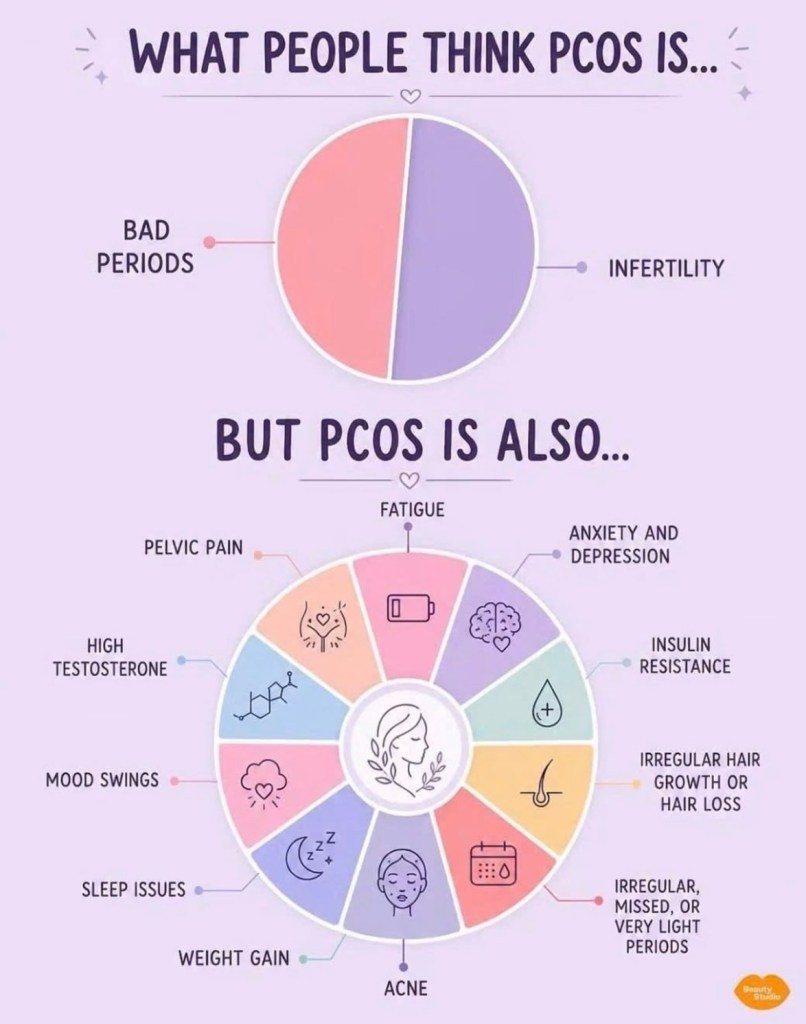
The current one for me is high blood sugar levels caused by insulin resistance.
Good God!
A significant number of women diagnosed with PCOS have insulin resistance, a condition where the body’s cells do not respond normally to the hormone insulin. This can cause glucose to build up in the bloodstream and can contribute to stubborn weight gain. Let me not bore you with the science behind it, but consistently high blood sugar levels can pave the way for type 2 diabetes.
Simply put:
PCOS → Insulin resistance → High blood sugar levels → Increased risk of type 2 diabetes.
Imagine living with this scare.
And then there’s the weight gain. The kind that makes you question your body, your efforts, and sometimes even yourself. You work out, you try to eat better, you keep trying, but it feels like nothing is changing.
And just when you start wondering if you’re simply not trying hard enough, you realise there’s more going on beneath the surface. PCOS can affect your metabolism, and insulin resistance can affect the way your body processes and stores energy, making weight management feel like an uphill battle even when you’re genuinely trying.
Crazy!
And you know what’s crazier? Medical practitioners gaslighting you and dismissing your symptoms.
I once complained to a doctor that the medication he prescribed was messing with my mind, and he told me it was all in my head. But after doing some deep research on the medication, I discovered that it could actually cause emotional side effects such as anxiety and depression.
Another doctor told me to simply endure a symptom I complained about because PCOS was a lifelong condition, and that I should come back for ovulation induction when I was ready to conceive. As if it were that easy.
Or the doctor who spent the entire consultation lecturing me about how his colleague hadn’t advised me properly on certain decisions?
Don’t get me wrong, some doctors are good. I’ve met some really good ones; most of the time, they may not have all the solutions to your symptoms, but their concern, empathy, and compassion make you feel safe. And sometimes, that alone makes a world of difference.
You might be wondering, why so many doctors? Well, on this side of life, we thrive on second, third, and even fifth opinions.
Another big branch on the tree of PCOS is irregular periods. This one is probably the most talked about, but that doesn’t make it any less disturbing.
Is it missing your period for a good number of months? Or having it suddenly show up and last for an unusually long number of days? Which one is more appealing? Or is it the fact that you can’t control or fully recover from either?
The science here is that ovulation is not happening. And when your ovaries aren’t releasing an egg consistently, your periods can become irregular, and getting pregnant can become difficult. It’s one of the thousand ways that PCOS disrupts the normal rhythm of a woman’s body.
Then there’s what it does to the gut. The bloating, the digestive discomfort, the feeling that your stomach is constantly having a conversation of its own. PCOS can be associated with changes in gut health and digestive symptoms. And honestly, that’s one of the most frustrating things about PCOS: it doesn’t always announce itself loudly. Sometimes it just quietly disrupts different parts of your body, leaving you wondering what exactly is going on.
Another major branch is the high androgen levels that accompanies PCOS. Yes, high male hormones in a woman. Definitely a nightmare. A woman develops male features like balding, broad shoulders, facial hair, and other things that make you question yourself.
And then there’s the acne. High androgen levels, alongside insulin resistance, can contribute to increased oil production and changes in the way skin cells shed, causing pores to become clogged. The result can be persistent, deep-seated and sometimes cystic acne. Imagine going through all of this and then having people ask you why you don’t have clear skin.
Draining!
Don’t get me started on the mental battles of PCOS. The constant mental battles!
The combination of high androgen levels and insulin resistance can also be associated with hormonal and metabolic changes that affect mood, emotional wellbeing and the body’s stress response. You wake up tired, drag yourself through the day in a fog of fatigue with your emotions scattered all over the place, and then go back to bed at night with a brain that still feels strained and restless.
And then you wake up and do it all over again.
This cycle is torture.
Let’s not forget what all of this does to your self-esteem. The constant distress over your body image. The stubborn weight that keeps accumulating, the unwanted facial hair, the acne that seems determined to stay. Slowly, you start feeling less comfortable in your own skin. You begin avoiding pictures, gatherings, conversation, anything that might invite another question or comment about your appearance. And before you even realise it, social withdrawal starts to feel easier than having to explain yourself. You stay away, not because you don’t want people around you, but because sometimes you just don’t have the energy to deal with their questions, their comments, or the way they make you feel about yourself.
And to be honest, most of the time it’s not even about what people think; it’s about how you see yourself, how you feel about your looks, and what you think of your appearance in public.
Then there’s the distress that comes with trying to conceive. The uncomfortable procedures, the hormonal medications that can take a toll on your body and mind, the emotional breakdowns you can’t always explain. The hope. The constant questions, the waiting, the uncertainty, and the feeling that your body is working against you.
It’s all just too much.
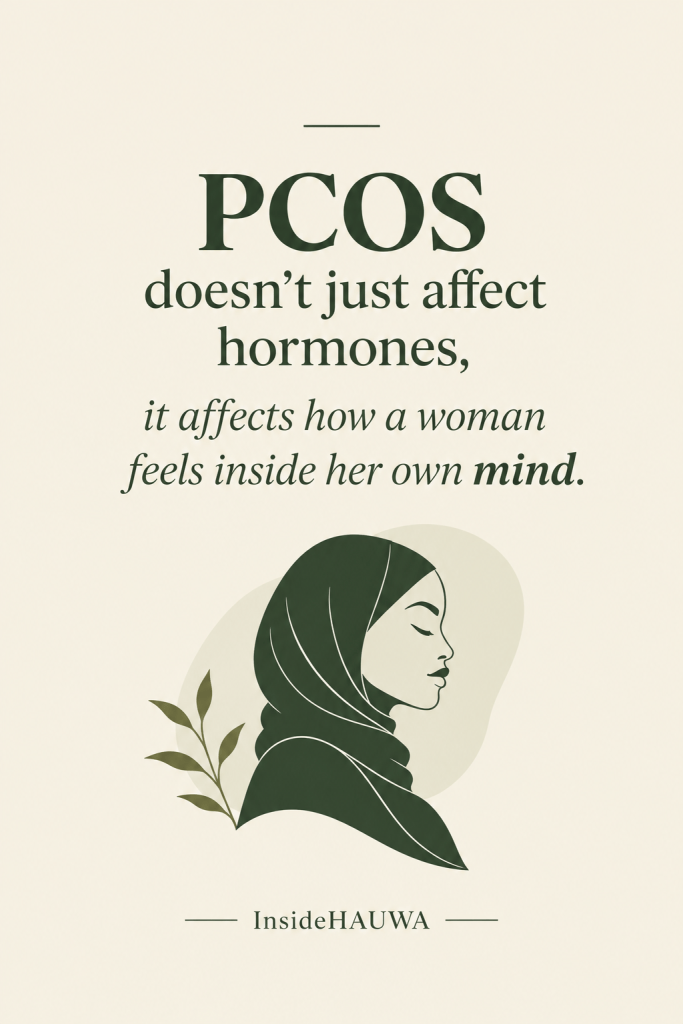
So you see, everything surrounding PCOS can become mentally exhausting in ways that are difficult to put into words. And the truth is, women living with this syndrome can crave a kind of understanding that is difficult to find. Family, friends, and even medical professionals can offer support, and for that, we are grateful. But unless you are living through these symptoms, the uncertainty, the treatments, the disappointments, and the constant battle with your own body, it can be almost impossible to truly understand the weight of it all, even when you genuinely try.
PCOS (Polycystic Ovary Syndrome) affects about 1 in 10 women of reproductive age. Recently, the condition was given a proposed broader terminology: PMOS (Polyendocrine Metabolic Ovarian Syndrome), a name intended to better reflect its complex, multi-system nature.
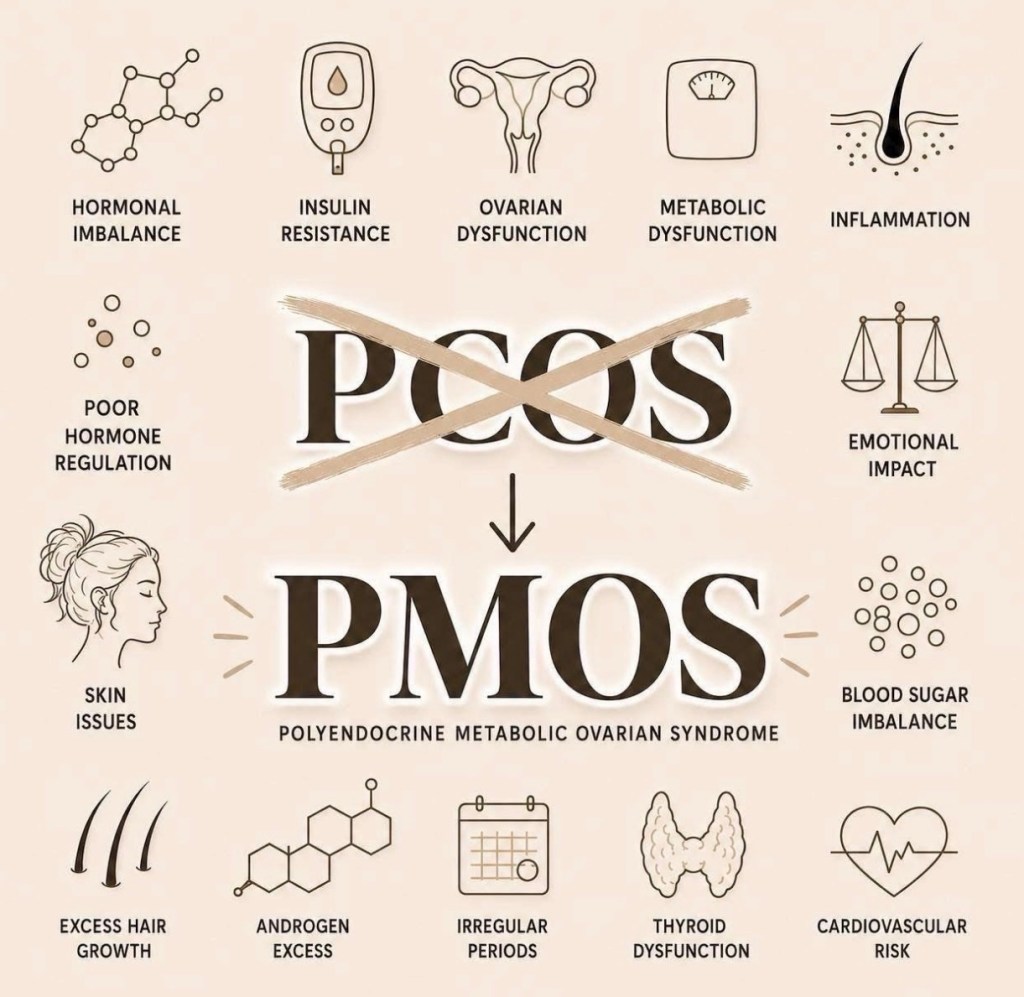
But honestly, I think we should be celebrating something more: actual treatments that work, research that prioritises women, adequate awareness, and proper education about this syndrome. Because, for me, I often leave the hospital with more questions than answers. And if the name of the condition is evolving faster than our understanding of how to treat it, then perhaps we have bigger things to worry about.
So, to every woman with PCOS who is reading this, I can’t promise you that I understand your battle. I don’t even fully understand mine. But I want you to know that you are not alone.
This ship of ours is carrying millions of women who are all trying to make sense of this condition, trying to understand their bodies, trying to find answers, and trying to hold on through it all.
We may not have all the answers yet, but at least we know we are not sailing this ship alone. And hopefully, we all find proper treatment soon.
Right now, for me, I’ve chosen to give the hospital a break, take a pause from my prescriptions, slow down with the supplements, and just breathe. I want to step back, listen to my body, and give myself some space to focus on proper nutrition and a healthier way of living. Maybe, for a while, I just need to stop fighting my body and forcing it to be normal.
Maybe this is the true way to heal.
To everyone else reading this, as I always preach, kindness is the best way to get through life. You don’t have to know or understand the heaviness in someone’s heart before you choose to be kind. You may never know what someone is carrying behind their smile, their silence, or even their strength.
There shouldn’t be conditions or limits tied to kindness. Just be kind. Always.
We are all carrying loads; if we can all stay kind to one another, the world will be merry.
Adios!
IG @maijidda_mk

